
VACUUM RECOVERY EQUIPMENT

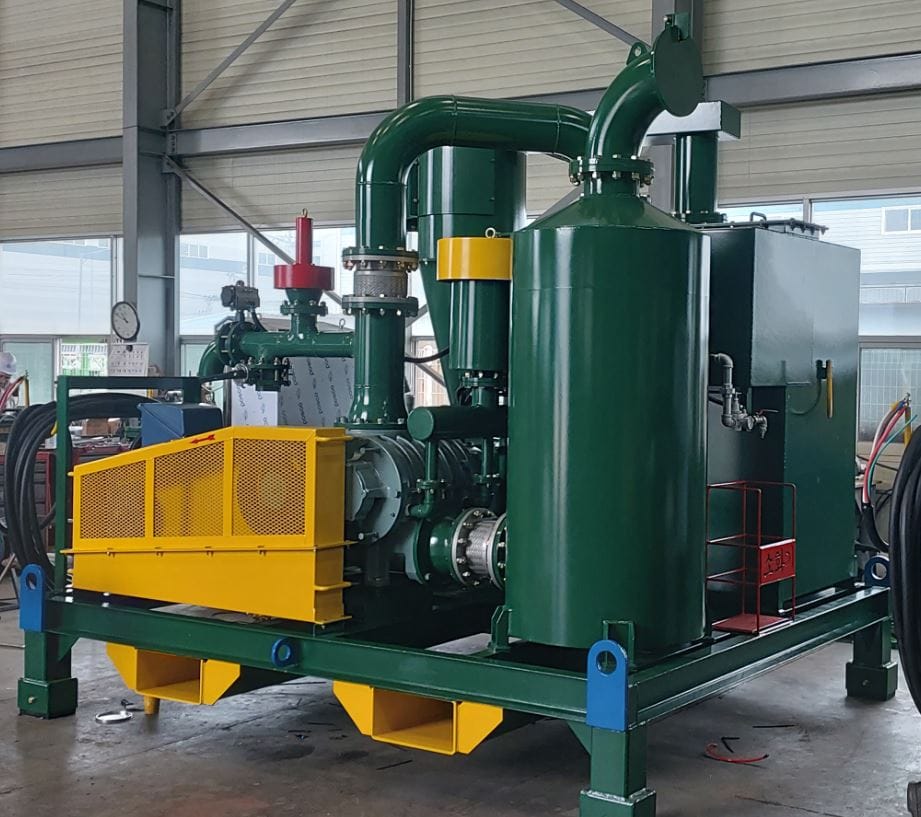
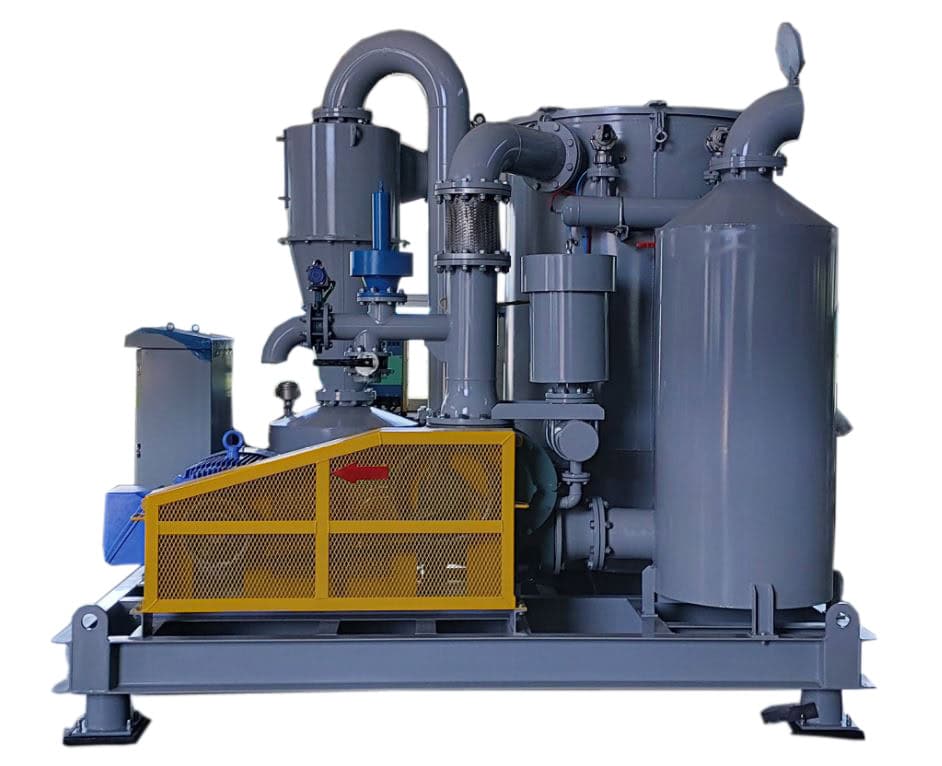
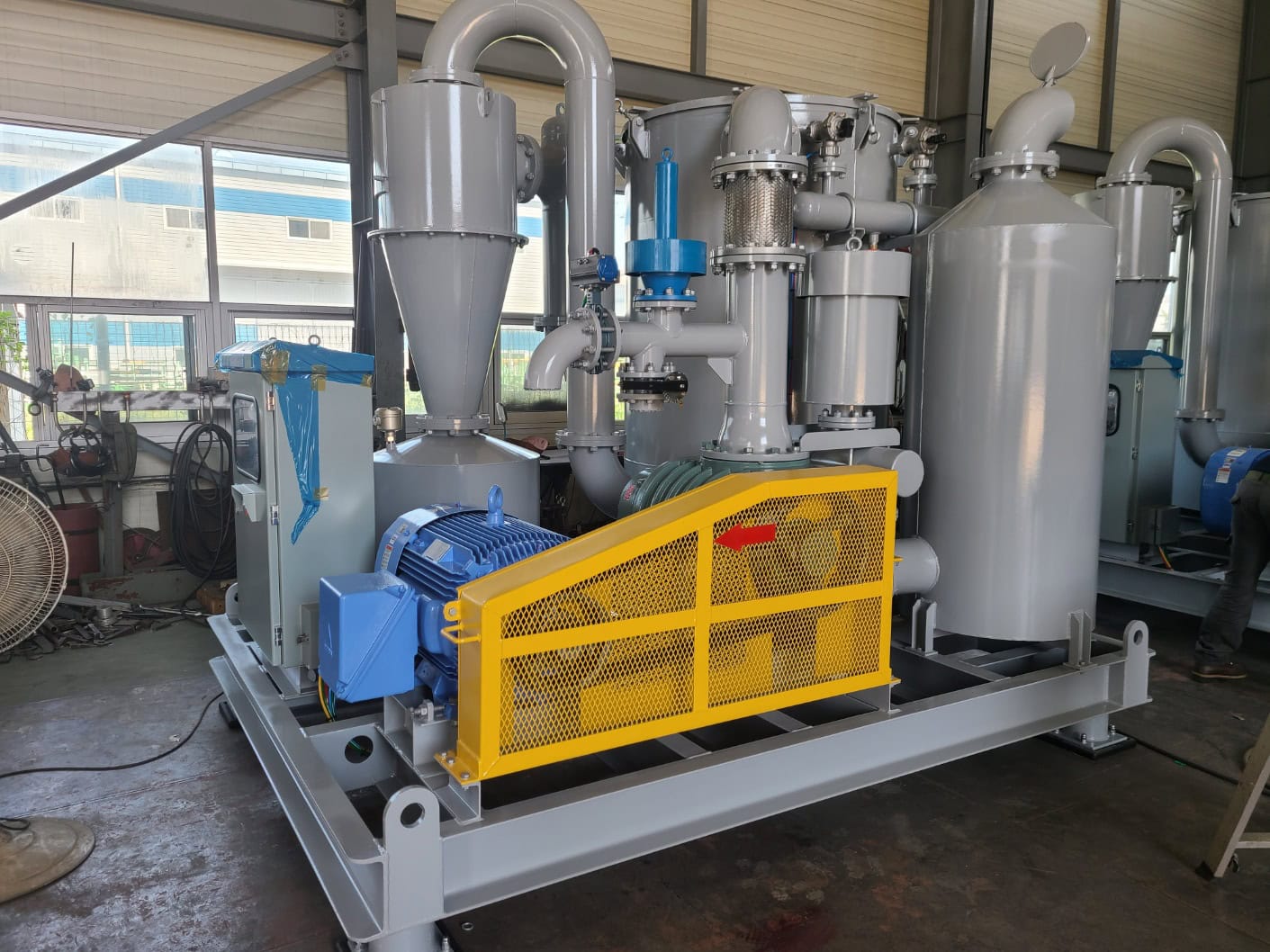
VACUUM RECOVERY EQUIPMENT
Vacuum Recovery : Overview and System Description
Vacuum Recovery Equipment is widely used in shipyards and heavy industrial applications for the recovery of used abrasive media generated during blasting operations. The recovered abrasive can be routed either for controlled disposal or for recycling and reuse, depending on operational requirements and abrasive condition.
The system is electrically driven and designed for continuous, heavy-duty industrial operation. It is particularly suited for harsh environments such as ship repair yards, dry docks, blasting rooms, and offshore fabrication facilities.
The suction performance and overall efficiency of a vacuum recovery system depend on several key factors, including horizontal conveying distance, vertical lifting height, abrasive type and particle size, hose configuration, and ambient climatic conditions. Longer distances and higher vertical lifts require higher airflow and vacuum pressure, which directly influence system design and power selection.
At the heart of the system is the Roots Blower, which generates the airflow and negative pressure required to lift and convey abrasive material. The correct selection of the roots blower is critical and is based on airflow demand, vacuum pressure requirement, duty cycle, and environmental conditions.
Climatic conditions play a major role in system performance and reliability. Equipment designed for moderate European climates may not operate efficiently in Middle East conditions, where ambient temperatures can reach 48 to 50 degrees Celsius. High temperatures can adversely affect blower performance, motor efficiency, bearing life, and overall system reliability.
Euroblast addresses this challenge by offering bespoke-engineered vacuum recovery systems. Each system is specifically designed to suit the operating climate, required capacity, application, and site conditions. Special consideration is given to cooling, material selection, motor sizing, and system layout to ensure reliable and consistent performance even under extreme temperature conditions.
For shipyard mobile applications, vacuum recovery units in the range of 75 kW to 90 kW are most commonly used, both in blasting rooms and open ship repair facilities. In addition, Euroblast designs and manufactures vacuum recovery systems in various other capacities such as 45 kW, 55 kW, 120 kW, and higher, tailored to specific project requirements.
This bespoke engineering approach ensures optimal recovery efficiency, long service life, reduced downtime, and dependable operation across diverse industrial applications and climatic environments.
technical specifications
1. General Description
Vacuum Recovery Equipment is designed for the collection, recovery, and transfer of used abrasive media from blasting operations in shipyards and heavy industrial facilities. The recovered abrasive can be directed either for safe disposal or recycling, depending on process requirements.
The system is electrically driven and engineered for continuous, heavy-duty operation under harsh industrial and climatic conditions. Euroblast Vacuum Recovery Systems are bespoke-engineered, considering application, capacity, conveying distance, vertical lift, abrasive type, and climatic conditions, particularly for high ambient temperatures up to 50°C.
2. Typical Applications
• Ship repair yards
• Dry docks
• Blasting rooms and paint shops
• Hull and block blasting operations
• Offshore fabrication yards
• Heavy industrial surface preparation facilities
3. System Capacity Considerations
The suction capacity and recovery efficiency depend on:
• Horizontal conveying distance
• Vertical lifting height
• Abrasive type and particle size
• Ambient temperature and humidity
• Hose diameter and length
• Duty cycle and operational hours
4. Main Components
Roots Blower (Core Component): Heavy-duty industrial roots blower designed for continuous operation. Selection is based on airflow, vacuum pressure, distance, height, and climate.
Electric Motor: High-efficiency motor suitable for high ambient temperatures.
Suction Hoses: Abrasion-resistant, anti-static flexible hoses.
Cyclone Separator: High-efficiency primary abrasive separation.
Dust Filtration Unit: Cartridge or bag filter system for fine dust.
Abrasive Collection Hopper: Heavy-duty hopper for disposal or recycling.
Rotary Airlock Valve: Maintains vacuum during discharge.
Exhaust Silencer: Noise reduction without airflow restriction.
Electrical Control Panel: Industrial-grade with protection and optional VFD.
Mobile Skid / Trailer: Heavy-duty frame with wheels or forklift pockets.
5. Standard Power Ratings
45 kW – Small Capacity
55 kW – Medium Capacity
75 kW – Mobile Shipyard Units
90 kW – High Capacity Mobile Units
120 kW & above – Heavy-Duty Industrial Units
6. Operating Conditions
Ambient Temperature: Up to 48–50°C
Operation: Continuous / Heavy Duty
Installation: Mobile or Stationary
Climate Suitability: Temperate & Middle East climates
7. Design Philosophy – Euroblast Advantage
Euroblast systems are custom engineered to suit extreme environments and demanding shipyard applications. Unlike standard European designs, Euroblast equipment is optimized for Middle East climatic conditions to ensure reliability, efficiency, and long service life.
8. Compliance & Standard
Designed in accordance with relevant international industrial standards with emphasis on safety and operational reliability.
9. Optional Features
• Variable Frequency Drive (VFD)
• Multiple suction hose connections
• Integration with abrasive recycling systems
• Custom hopper discharge arrangements
• Noise reduction enclosures
10. Manufacturer
Euroblast
Specialists in Blasting, Coating & Recovery Systems